
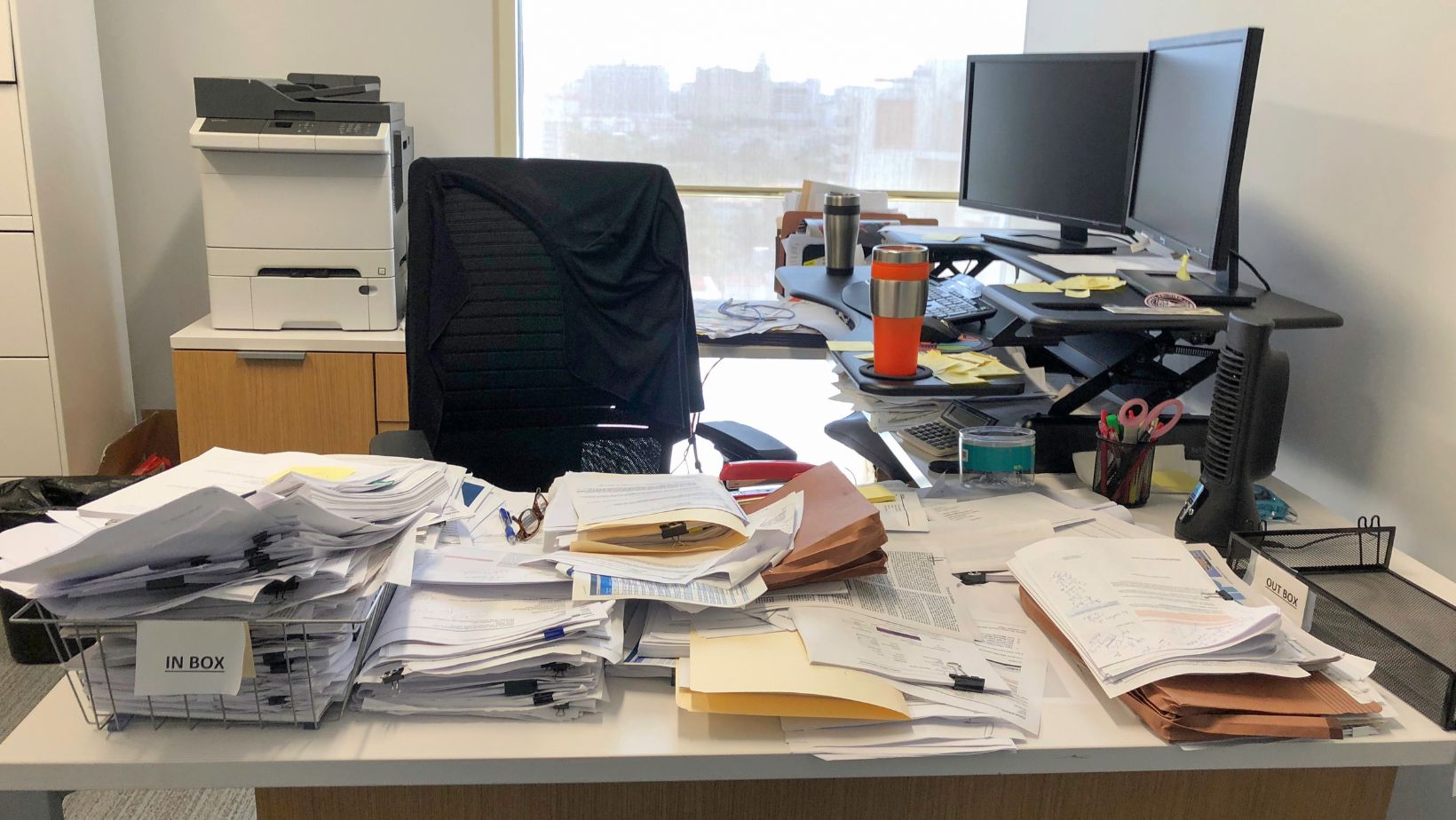
A clean desk may sound like a simple office organization rule, but it can do much more than keep workspaces tidy. A strong clean desk policy helps protect private information by making sure sensitive documents are not left out where the wrong person could see them.
For many businesses, a clean desk policy is an important part of everyday data security. Client records, employee files, financial paperwork, contracts, handwritten notes, and printed forms can all contain confidential information. When those documents are left on desks, printers, meeting tables, or in regular recycling bins, they can create unnecessary risk.
The good news is that building a clean desk policy does not have to be complicated. It simply needs to be clear, realistic, and easy for employees to follow. Here is how to create one that actually helps protect private information in your workplace.
What Is A Clean Desk Policy?
A clean desk policy is a workplace procedure that explains how employees should handle documents, files, and other sensitive materials when they are not actively using them.
The goal is not to stop people from working with paper. Most businesses still rely on printed documents in some way, even if they have digital systems. A clean desk policy simply makes sure confidential documents are not left exposed during breaks, after hours, in shared spaces, or once they are no longer needed.
A good policy should cover:
- Paper documents and files
- Printed forms and reports
- Client or customer records
- Employee and payroll information
- Financial documents
- Legal paperwork
- Notes that include private details
- Documents left near printers, copiers, or scanners
When employees know exactly what to do with sensitive paperwork, it becomes much easier to reduce the risk of unauthorized access.
Why A Clean Desk Policy Matters For Private Information
Private information does not only become a risk during a major data breach. Sometimes, exposure happens in very ordinary ways.
A client file may be left on a reception desk. A payroll report may sit on a printer for hours. A stack of old documents may end up in an open recycling bin. A visitor, vendor, cleaning crew member, or unauthorized employee could see information they should not have access to.
That is why a clean desk policy matters. It creates a consistent routine for handling confidential documents before they become a problem.
For businesses in Arizona and other busy service areas, this can be especially helpful in offices where employees, clients, delivery drivers, and vendors may come and go throughout the day. The more people who move through a workplace, the more important it is to keep private information protected.
Start By Defining What Counts As Confidential
A clean desk policy will only work if employees understand what information needs to be protected. Do not assume everyone has the same definition of “confidential.”
Create a clear list of document types that should never be left unattended. This may include:
- Customer or client records
- Medical or insurance documents
- Employee files
- Payroll documents
- Bank statements
- Tax records
- Contracts
- Legal documents
- Account numbers
- Internal business reports
- Vendor agreements
- Printed emails with sensitive details
It is also worth reminding employees that handwritten notes can contain private information too. A sticky note with a client name, phone number, account detail, or password can still create risk.
The clearer your examples are, the easier it is for your team to follow the policy correctly.
Create Simple Rules For Daily Desk Use
The best clean desk policies are practical. If the rules are too complicated, employees are less likely to follow them consistently.
Your policy should explain what employees need to do during the workday, when they leave their desk, and at the end of the day.
For example, employees should be asked to:
- Keep only the documents they are actively using on their desks
- Put confidential documents away before leaving their workstation
- Lock sensitive files in a drawer, cabinet, or designated storage area
- Remove printed documents from printers and copiers right away
- Clear meeting rooms after client or internal discussions
- Avoid leaving passwords or private notes in plain view
- Place documents that are ready for destruction in a secure shred container
This does not mean every piece of paper needs to disappear the second someone steps away. It means confidential documents should be handled with care and not left exposed longer than necessary.
Secure Documents That Still Need To Be Kept
One mistake businesses sometimes make is treating all paper clutter the same way. Not every document on a desk is ready to be shredded. Some files are active, some need to be reviewed, and others must be retained for a certain period of time.
Your clean desk policy should clearly explain where employees should place documents that still need to be kept.
Secure storage options may include:
- Locked filing cabinets
- Lockable desk drawers
- Restricted-access file rooms
- Department-specific storage areas
- Clearly labelled active file folders
This matters because secure document disposal is only one part of protecting private information. Documents that still need to be kept should be stored properly, not left in open piles or mixed in with paperwork that is ready to be destroyed.
Set Up A Secure Disposal Process
Once confidential documents are no longer needed, they should not go into regular trash or recycling bins. Those areas are not designed for secure disposal, and sensitive paperwork can still be seen, handled, or removed before it is properly destroyed.
A strong clean desk policy should tell employees exactly what to do with documents that are ready to be destroyed. This is where professional document shredding services can make the policy much easier to follow.
When a business chooses a scheduled shredding service, locked shred collection containers are typically provided and placed in convenient areas throughout the office. These containers give employees a secure place to put confidential documents that are no longer needed between shredding dates. Instead of letting paperwork pile up on desks or tossing it into unsecured bins, staff can place it directly into the locked container until the next scheduled shredding visit.
Depending on your business needs, you may benefit from:
- Scheduled shredding services for ongoing document disposal
- One-time shredding services for office cleanouts or file purges
- Mobile shredding services for convenient on-site destruction
- Locked collection containers for daily use
A-1 Shredding helps businesses create a more secure disposal process by making document destruction simple, reliable, and easy to fit into daily operations.
Do Not Forget Shared Office Areas
A clean desk policy should not only apply to individual desks. Some of the biggest privacy risks happen in shared spaces where many people pass through.
Your policy should include rules for areas such as:
- Printers and copiers
- Reception desks
- Conference rooms
- Mail areas
- Break rooms
- Shared workstations
- Filing stations
For example, employees should pick up printed documents right away, clear meeting rooms after use, and avoid leaving client paperwork in open areas. If documents are no longer needed, they should go into a secure shred container instead of a regular garbage or recycling bin.
Shared spaces are easy to overlook, but they are often where sensitive information is most visible.
Train Employees So The Policy Becomes A Habit
A clean desk policy is only useful if employees understand it. Handing out a policy once and hoping everyone remembers it is usually not enough.
Training should explain:
- Why the policy matters
- What types of documents need protection
- Where active files should be stored
- When documents should be shredded
- How to use locked shred containers
- What employees should do before leaving for the day
Keep the training straightforward. The goal is not to make people feel watched or punished. The goal is to give them a simple routine that helps protect clients, employees, and the business.
You can also include clean desk expectations in onboarding, employee handbooks, and periodic team reminders.
Make The Policy Easy To Follow
The easier the policy is, the more likely employees are to follow it.
If the nearest shred container is far away, people may leave documents on their desks “just for now.” If storage areas are messy or unclear, files may pile up in open spaces. If the policy is too long or confusing, employees may ignore it.
To make your clean desk policy more effective:
- Place secure shred bins in convenient locations
- Label storage areas clearly
- Keep instructions short and direct
- Use end-of-day checklists
- Make sure managers follow the same rules
- Review the policy during staff training
Security works best when it fits naturally into the workday.
Review The Policy Regularly
Businesses change over time. Your team may grow, your office layout may shift, or your document volume may increase. That is why your clean desk policy should be reviewed regularly.
Consider updating your policy when:
- You move offices
- You add new departments
- You change how documents are stored
- You notice paperwork piling up again
- You complete a major file cleanout
- You add scheduled shredding services
- You identify a privacy concern or near miss
A clean desk policy should not be a one-time document that gets forgotten. It should be a living part of your workplace security process.
Final Thoughts
A clean desk policy is not just about having a neat office. It is about protecting private information before it becomes vulnerable.
By setting clear rules for document handling, secure storage, shared spaces, and document shredding, your business can reduce risk and help employees build better habits. The most effective policies are simple, practical, and supported by the right tools, including locked shred containers and professional shredding services.
A-1 Shredding can help your business protect confidential documents with secure shredding solutions that support your clean desk policy and make document disposal easier for your team.
Contact A-1 Shredding today to learn more about secure document shredding services and how we can help your workplace protect private information with confidence.
FAQs About Clean Desk Policies
What Is A Clean Desk Policy?
A clean desk policy is a workplace rule that explains how employees should handle documents, files, and sensitive information when they are not actively using them. It helps prevent confidential paperwork from being left out where unauthorized people could see it.
Why Is A Clean Desk Policy Important?
A clean desk policy is important because it helps protect private information, reduce the risk of unauthorized access, and support better workplace data security. It also helps employees build consistent habits around document storage and disposal.
What Should Be Included In A Clean Desk Policy?
A clean desk policy should include rules for clearing desks, securing active files, removing documents from printers, protecting shared spaces, and placing documents that are no longer needed in secure shred containers.
Does A Clean Desk Policy Mean Employees Cannot Have Paper On Their Desks?
No. Employees can still use the paperwork they need to do their jobs. The policy simply makes sure confidential documents are not left exposed when they are not being used.
How Does Shredding Support A Clean Desk Policy?
Shredding supports a clean desk policy by giving employees a secure way to dispose of confidential documents that are no longer needed. Locked shred containers and scheduled shredding services help keep sensitive paperwork out of regular trash and recycling bins.
How Can A Business Get Employees To Follow A Clean Desk Policy?
The best way to get employees to follow a clean desk policy is to keep it simple, provide clear training, place secure storage and shred containers in convenient locations, and explain why the policy matters.
